
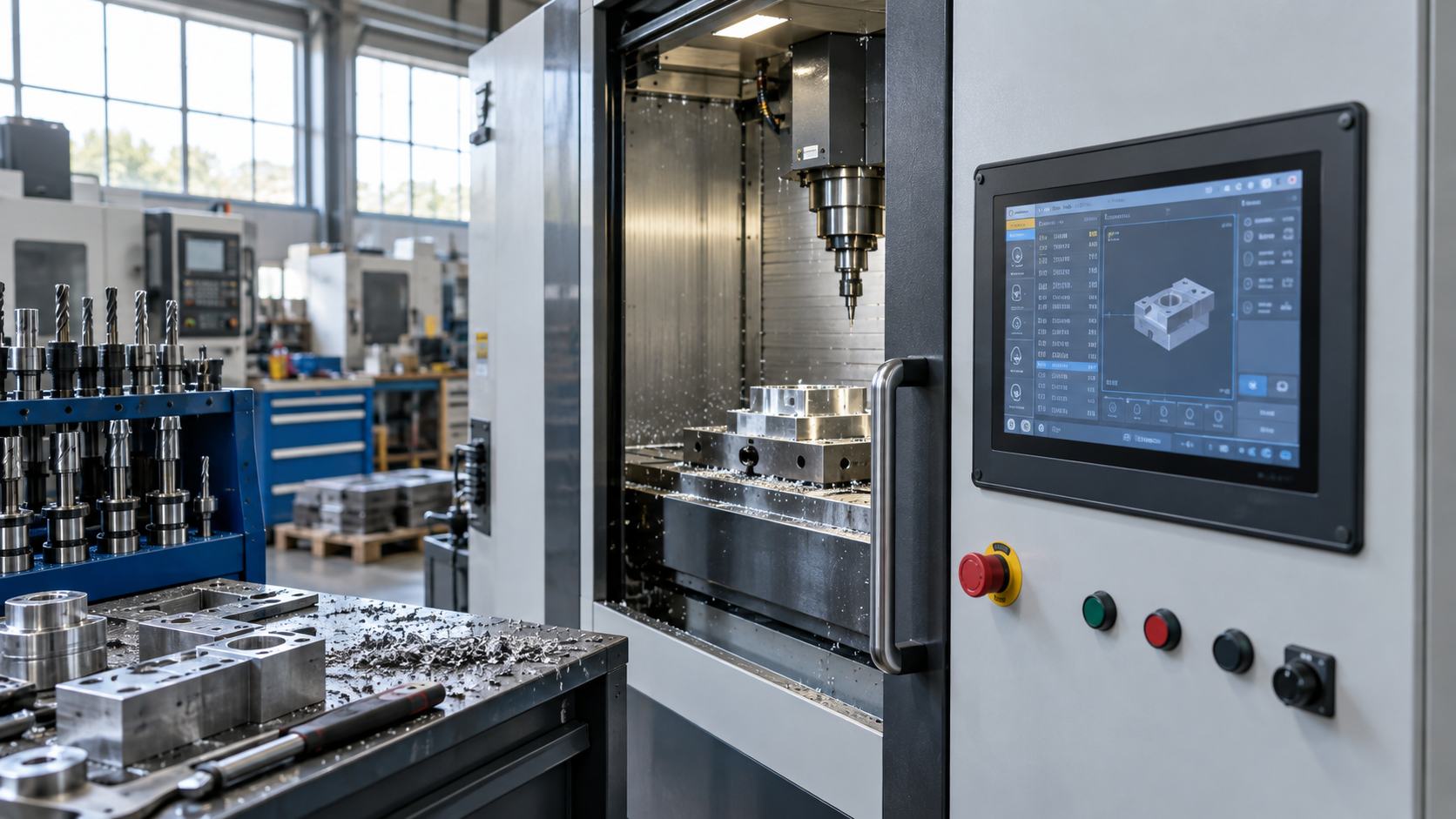
A CNC control panel lives in one of the unfriendliest places in the factory. It sits a few centimeters from flying metal chips, is touched by hands covered in coolant and oil, vibrates for years at the same frequency as the spindle, and is expected to keep the same calibration it had on day one. A phone screen or a tablet would last a matter of weeks. That is why the difference between a panel that works in a CNC shop and one that merely looks good on a spec sheet is decided by details the shop floor reveals only after the machine is delivered.
Over time, the same set of failures shows up in retrofit projects: a touchscreen that drifts, a bezel that traps coolant behind the glass, a connector that loosens from vibration, or a screen that is unreadable once the overheads are switched on. Most of these are not failures of processing power. They are failures to design for the environment the screen will live in.
The operator's hands are never clean
In a CNC shop, operators change tools, wipe fixtures, and handle cutting fluid without stepping away from the panel. A resistive screen tolerates gloves and a stylus, but it needs more pressure and feels slower than the capacitive screens people use every day. A capacitive screen is faster and cleaner to use, but it needs tuning if operators will tap it with gloves or wet fingers. A panel that ships with a generic touch layer, untested for oil or glove operation, is the fastest way to a frustrated operator and a service call.
This is where the choice of cover glass matters. Chemically strengthened glass will survive more knocks from tooling and wrenches. An oleophobic coating helps, but only if it matches the cutting fluids used on the floor. Some shops use water-soluble coolant; others use straight oil. They leave different residues, and the cleaning wipes a maintenance crew keeps nearby may or may not be safe for the coating.
Vibration does not take a break
CNC machines move mass fast. Even on a rigid floor, the control cabinet shakes, and anything bolted to the door shakes with it. Standard consumer mounts will loosen. Board-to-cable connections fatigue. Solder joints crack over months, not days, which is why they often fail right after the warranty period.
A panel built for this environment carries its own stiffness. The F IC 7" panel from AOYU TECH uses an integrated aluminum die-cast frame rather than a thin sheet-metal back. That stiffness matters when the panel is mounted on a swing arm or on the side of a cabinet where vibration concentrates. For recessed mounting into the cabinet door itself, the S Series shell-less panels sit flush and transfer stress through the mounting perimeter rather than through the display stack.
Coolant finds every gap
Machine shops are wet. A fine mist of coolant hangs in the air, settles on surfaces, and slowly migrates toward any seam. Once it gets behind the bezel, it discolors the backlight film, corrodes the touch flex, and leaves a cloudy patch in the center of the screen that no software update can fix.
Sealing starts at the mounting. A front-embedded panel compresses a gasket against the front of the cutout, which blocks most of the direct spray and mist. A rear-embedded or open-frame design can work in a cleaner electrical cabinet, but it needs its own sealing strategy if the cabinet door is opened often or sits close to the machine. The point is not to chase the highest IP number on the datasheet; it is to match the seal design to where the panel will actually sit.
Where it lives changes everything
There are two common homes for an HMI on a CNC machine. One is the door of the electrical cabinet, where the operator stands to load programs and jog axes. The other is a swing arm or pedestal near the work envelope, where the operator needs the screen while changing setups.
For the cabinet door, a shell-less embedded panel such as the S Series 7" or 10.1" keeps the front surface flat and avoids the raised bezel that traps chips. For a swing-arm or standalone mount, a panel with its own housing and frame, like the F IC 7", is easier to cable and protects the back of the unit from bumps. Both can run the same software, but the mechanical envelope is different.
It is also a computer, not just a display
Modern CNC workflows expect the panel to do more than show axes and feed overrides. It may need to log cycle times, push status to a cloud dashboard, read a barcode on a tool cart, or let an engineer push a software update without visiting the machine. That turns the HMI into an edge computer that happens to have a screen.
The B Series industrial edge HMI panels are built around this idea. They provide local processing near the machine while keeping the display interface the operator expects. Whether that means running Linux, Android, or Windows depends on the control software already in use, but the hardware needs the I/O and thermal headroom to stay up through long cycles.
Factory lighting is not office lighting
A screen that looks fine under fluorescent tubes can turn into a mirror once a machining center is lit by high-bay LEDs and the afternoon sun comes through a skylight. Anti-glare treatment helps, but it softens the image. High-brightness panels help, but they draw more power and run warmer. The right balance depends on whether the panel faces a window, faces the machine lights, or sits in a shadowed cabinet alcove.
Before you release the drawing
- Will operators use bare fingers, gloves, or a stylus most of the time?
- What cutting fluid or coolant is in use, and what will maintenance wipe the screen with?
- Is the panel recessed in a cabinet door, on a swing arm, or on a pedestal?
- How much vibration and shock will it see during normal cutting?
- Does the panel face direct machine lighting, windows, or both?
- What I/O, network, and software environment must it connect to?
Each answer changes the glass, the touch layer, the housing, the mounting, and the computer inside.
If you are choosing an HMI panel for a CNC machine or building one into a machine control system, send us the machine type, mounting position, and software requirements. We can recommend a fit from the S Series shell-less panels, the F IC die-cast panel, or the B Series edge HMI. Bezel finish, cover glass, I/O, mounting hardware, and branding can be adjusted for OEM and ODM orders. Start with the inquiry page and we will reply within one business day.
Related products
Explore our HMI panels
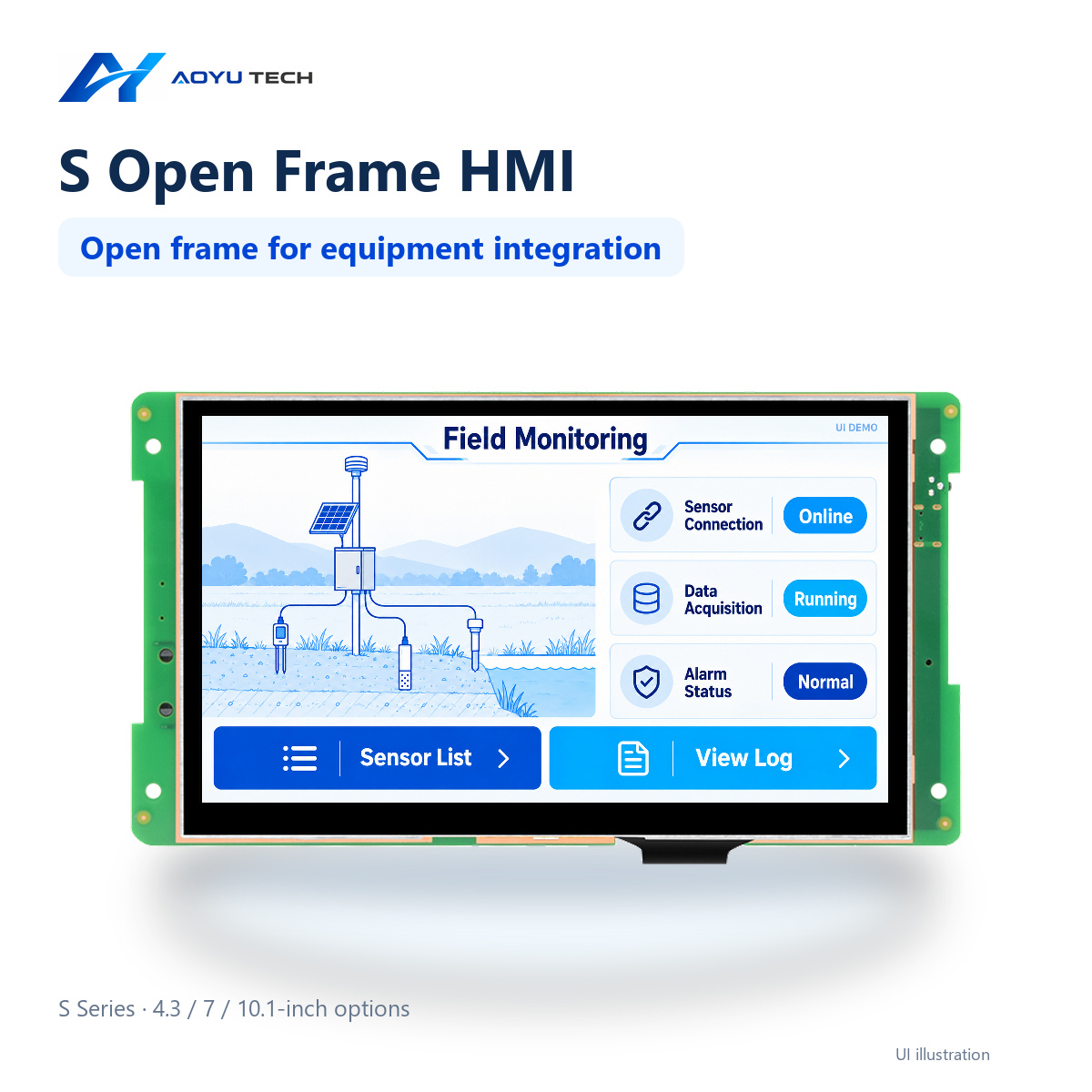
S-070 7-inch HMI Panel
Size: 7 inches. Resolution: 1024 × 600 px. Backlight brightness: 500 cd/m². Viewing angle:…
View product →S-101 10.1-inch HMI Panel
Size: 10.1 inches. Resolution: 1024 × 600 px. Backlight brightness: 500 cd/m². Viewing ang…
View product →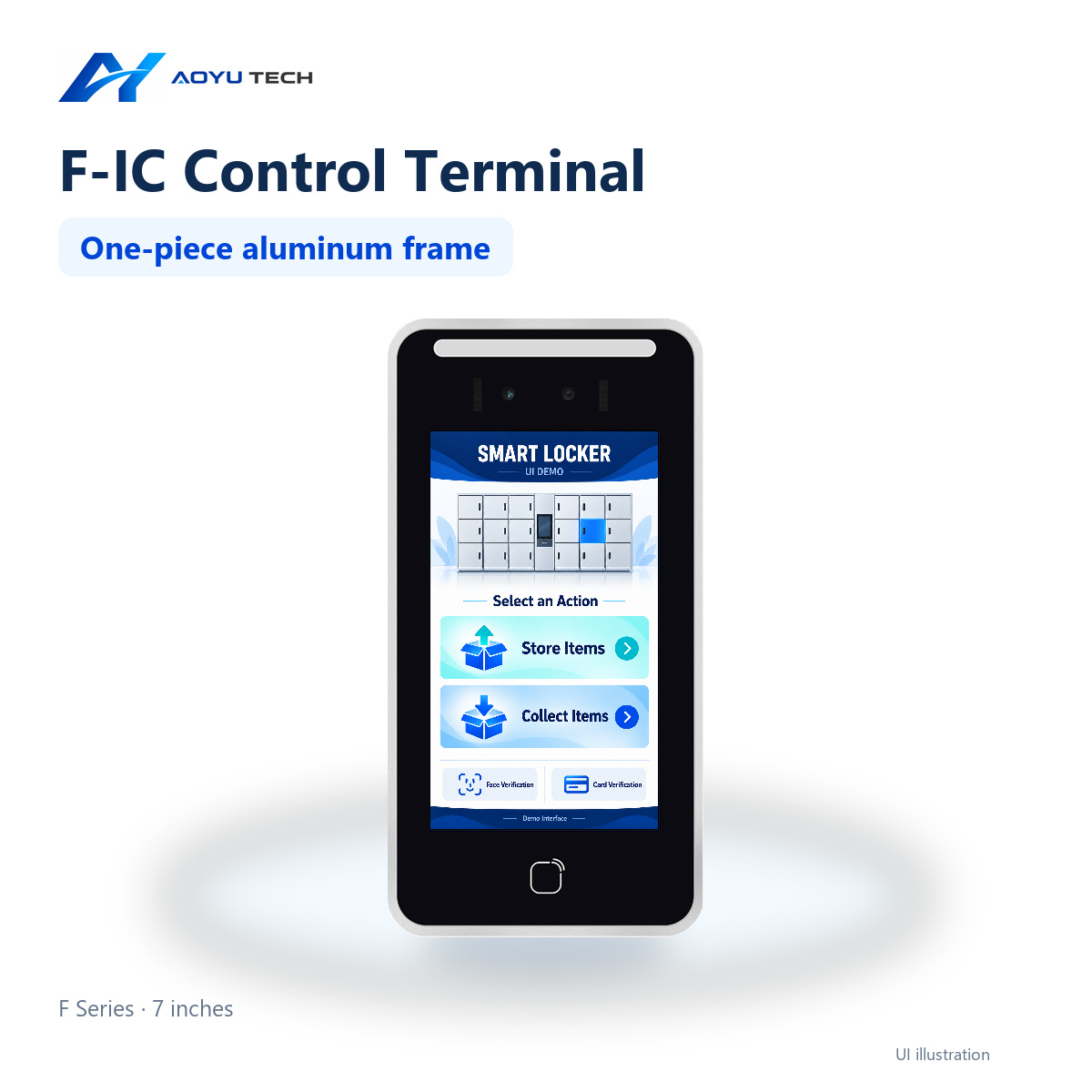
F-IC-7 7-inch HMI Panel
Material: Die-cast aluminum alloy. Mounting methods: Exterior inset mounting. Front panel …
View product →Ready to start your HMI project?
Our engineers help you choose the right HMI hardware and software for your project.