
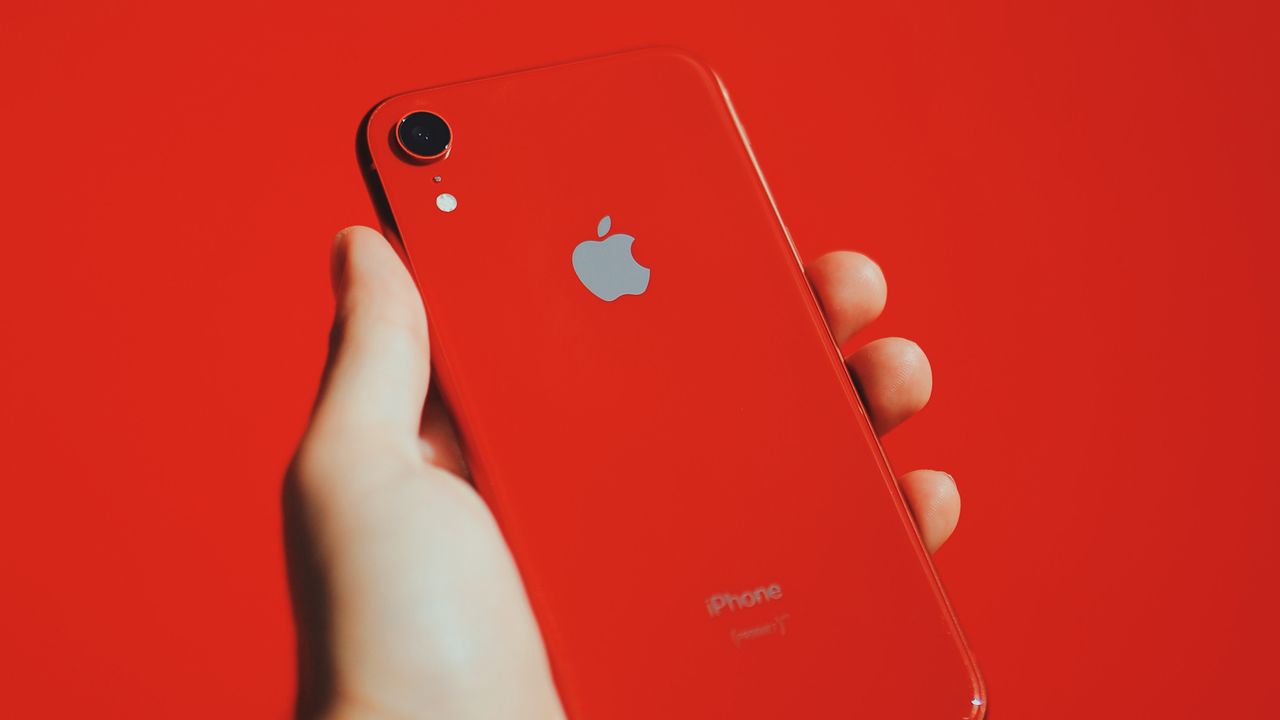
Apple launches its first foldable iPhone, the iPhone Duo
Apple unveiled the iPhone Duo, its first foldable iPhone, at a September 9 event in Cupertino. The launch was the first iPhone event led by new CEO John Ternus, who took over from Tim Cook on September 1. The passport-sized phone opens to a 7.6-inch inner display and a 5.4-inch cover display, runs on Apple’s A20 Pro chip, and starts at $1,999 for 256GB, with a 2TB option at $3,199. Preorders open October 16 and sales begin October 23 in star white and night sky. Apple also introduced the iPhone 18 Pro and Pro Max, starting at $1,199 and $1,299 respectively, with preorders from September 12 and availability on September 18. (The Verge, Sept 9, 2026)
Qualcomm signs a chip deal worth up to $60 billion with Amazon
Qualcomm said Amazon could buy up to $60 billion of its AI data-center chips and related products under a ten-year agreement announced on September 9. The deal covers custom silicon optimized for AI inference on AWS, plus optical interconnect technology targeting speeds up to 1.6 terabits per second. Amazon received warrants to purchase up to 25 million Qualcomm shares at $161.26, tied to purchases, with about 15 percent vested after an initial commitment. Qualcomm said it will also expand its use of AWS services, including Amazon Bedrock, for chip-design workloads. Qualcomm shares closed up 3.17 percent after rising as much as 8.7 percent during the session. (Reuters, Sept 9, 2026)
OpenAI claims a proof on the Navier-Stokes problem
OpenAI announced in a September 8 blog post that an internal AI system produced a proof related to the Navier-Stokes existence and smoothness problem, one of the seven Clay Millennium Prize Problems that each carry a $1 million reward. The company said the system used roughly 10,000 concurrent agents and produced a 165-page proof, verified in the Lean proof assistant, after about 88 hours of work. The result reportedly shows that the three-dimensional equations can develop singularities in finite time. OpenAI said it will not pursue the Clay prize. NYU mathematician Tristan Buckmaster and Anthropic researcher Levent Alpöge had published a related result the day before and raised questions about whether OpenAI’s model had seen their work. (The Verge, Sept 9, 2026)
Meta rolls out Muse, a personal AI agent
Meta is rolling out Muse, a personal AI agent, in the United States on iOS, Android, and the web. Meta says Muse can act on its own once given a goal, opening a browser, filling out forms, and negotiating on the user’s behalf, while continuing to work in the background after the app is closed. The assistant will be free for most users, with paid subscriptions planned for heavier use. Muse is part of a multi-billion-dollar overhaul of Meta’s AI strategy under Alexandr Wang. Meta says each agent runs in a dedicated virtual machine with a separate security monitor, and that Muse data will not be used to target ads. (The Verge, Sept 9, 2026)
OpenAI says it is making progress on next-generation chips with Samsung
At a press conference in Seoul on September 9, OpenAI Korea general manager Harrison Kim said the company had made the most progress with Samsung Electronics on joint production and research for next-generation chips. Kim did not specify which chips Samsung would make or whether Samsung Foundry had won production orders. The partnership builds on prior ties: Samsung signed a letter of intent in 2025 to supply memory for OpenAI’s Stargate data centers, and OpenAI unveiled its first custom inference chip, Jalapeño, in June with Broadcom and TSMC. OpenAI also said ChatGPT Enterprise users at South Korean companies rose roughly 28-fold year-over-year by late August. (Reuters via Quartz, Sept 9, 2026)
Mistral AI raises €3 billion, led by Samsung Electronics
Mistral AI said on September 8 that it raised €3 billion in a Series D round that values the company above €21 billion, which it called the largest equity fundraising round by a private European technology company. Samsung Electronics led the round, joined by co-leads Scaleup Europe Fund, managed by EQT, and existing investor PSG Equity; new investors included Advent, BlackRock-managed funds, and the Grand Duchy of Luxembourg. Separately, Samsung signed a strategic partnership to build an on-premises AI model for semiconductor design and manufacturing using data from Samsung’s Device Solutions division. Mistral CEO Arthur Mensch told CNBC the funds will go toward more infrastructure, including its own data centers. (Korea JoongAng Daily, Sept 8, 2026)
JD Cloud plans a 100,000-GPU cluster on Moore Threads chips
JD Cloud plans to build a 100,000-GPU computing cluster using chips from Chinese GPU maker Moore Threads, the companies announced at JD’s 2026 Global Technology Explorers Conference on September 9. The cluster is intended for large-model training and inference, embodied AI, and JD’s JoyAI model family, with capacity made available to companies across industries. JD described it as the first deployment of Chinese GPUs at the 100,000-GPU scale by a major domestic cloud provider. The announcement aligns with Chinese government guidance calling for 10,000- and 100,000-card intelligent-computing clusters. JD and Moore Threads did not disclose a completion date or budget. (TechNode, Sept 9, 2026)
XPeng opens an automated production line for humanoid robots
XPeng opened a production line in Guangzhou on September 8 for its high-end general-purpose humanoid robot, IRON. The company said it is the first automated production line purpose-built for high-end humanoid robots, with core processes more than 80 percent automated and automotive-grade quality systems applied. IRON has 76 degrees of freedom across its body and 21 in each hand, runs three XPeng Turing AI chips with 2,250 TOPS of edge compute, and deploys a physical AI large model on the device without remote operation. XPeng plans to start mass production by the end of 2026 and begin China and overseas deliveries in 2027. (XPeng, Sept 8, 2026)
Cognition raises $2 billion at a $48 billion valuation
Cognition, the startup behind the autonomous coding agent Devin, said it raised $2 billion at a $48 billion valuation, roughly four months after a $26 billion round. Andreessen Horowitz, Accel, Founders Fund, General Catalyst, and Avenir co-led the financing. Cognition said its annualized run-rate revenue grew from $492 million in May to $900 million. Enterprise customers named include Mercedes-Benz, NASA, Goldman Sachs, and Citi. The Information reported that Cognition’s Nvidia cluster lease could push total cash burn toward $800 million this year and that the company projects $4 billion to $5 billion in annualized revenue by year-end. (TechCrunch, Sept 8, 2026)
An Anthropic researcher resigns over AI safety concerns
Anthropic pretraining researcher Jacob Coxon announced his resignation on September 8, writing on X that Anthropic and OpenAI are “racing straight to self-improving superintelligence and gambling with our lives.” Evan Hubinger, Anthropic’s alignment science lead, replied that Coxon was “correct” and that he personally estimates a greater than 10 percent chance that AI could kill all humans within the next decade. Hubinger added that Anthropic is “trying its best” but does not yet have a plan to solve alignment for superintelligence and is “not clearly on track.” The Wall Street Journal first reported Coxon’s departure. (Forbes, Sept 9, 2026)
Ready to start your HMI project?
Our engineers help you choose the right HMI hardware and software for your project.