
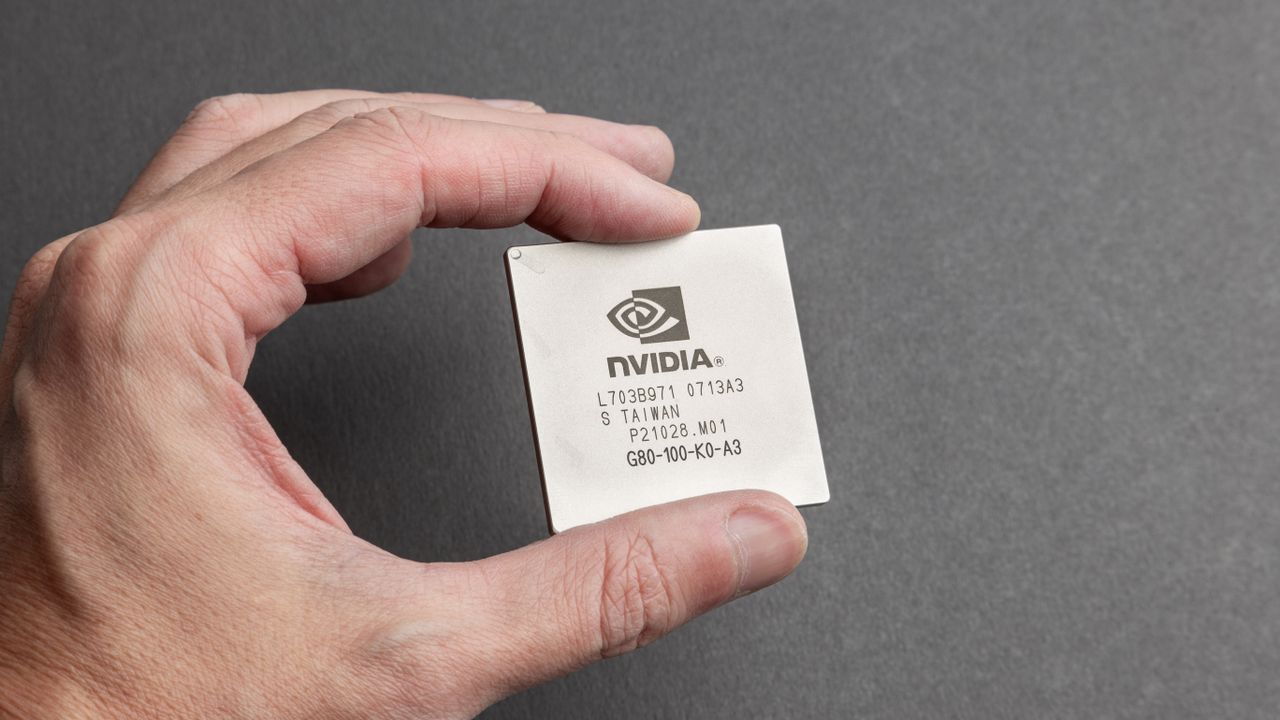
DOJ investigates whether Nvidia's Groq deal skirted antitrust review
The U.S. Justice Department is investigating whether Nvidia tried to bypass antitrust scrutiny through its $17 billion licensing deal with AI chip startup Groq, the New York Times reported on September 9, citing two people familiar with the matter. Under the December agreement, Nvidia obtained a non-exclusive license to Groq's chip technology and hired several executives, including founder Jonathan Ross. The DOJ opened the inquiry shortly after the deal was announced and has since sent Nvidia a formal demand for transaction records. If wrongdoing is found, the agency could levy fines but would probably not require the deal to be undone. Nvidia, Groq and the DOJ have not commented. (New York Times / CNA, Sept 9, 2026)
Oracle's cloud infrastructure revenue jumps 121% as RPO hits $664 billion
Oracle reported fiscal first-quarter 2027 revenue of $19.3 billion, up 30% year over year, with cloud infrastructure (IaaS) revenue surging 121% to $7.4 billion — above the $7.1 billion analysts had expected. Net income rose 60% to $4.76 billion. Remaining performance obligations reached $664 billion, exceeding the StreetAccount estimate of $631 billion. Oracle booked more than $30 billion in new AI-related contracts during the quarter and delivered over 300,000 GPUs to customers. Capital spending totaled $28.5 billion, pushing free cash flow to negative $5.4 billion. Shares rose as much as 7% in after-hours trading. Oracle guided full-year revenue of at least $90 billion. (Reuters / Seoul Economic Daily, Sept 10, 2026)
SpaceX signs new AI compute deal, CFO targets $100 billion ARR by year-end
SpaceX Chief Financial Officer Bret Johnsen told the Goldman Sachs Communacopia + Technology Conference on September 10 that the company recently signed an AI compute hosting agreement worth about $1.1 billion per month starting in December. Based on December's annualized revenue, SpaceX is confident it can reach a $100 billion annualized revenue run rate by the end of 2026. SpaceX has multiyear compute agreements with Anthropic ($1.25 billion/month through May 2029), Google ($920 million/month from October through June 2029) and Reflection AI. Johnsen said ground-based compute capacity will exceed 2 GW by year-end and expand to 5–10 GW next year, when the company plans to launch its first orbital computing satellites. Most compute contracts allow either party to terminate after several months. (MarketWatch, Sept 10, 2026)
DeepSeek releases V4.1 Flash with asymmetric architecture
DeepSeek released the V4.1 Flash model on September 10. The company disclosed for the first time that the model uses an asymmetric architecture designed to deliver large-model intelligence at lower inference cost. Generation speed has improved and API pricing has dropped compared with the previous version, alongside expanded benchmark results. (DeepSeek / National Business Daily, Sept 10, 2026)
Unitree open-sources humanoid robot foundation model
Unitree Robotics announced the full open-source release of UnifoLM-WLA-1.0, an embodied foundation model for humanoid robots. The model sets new state-of-the-art results on multiple open benchmarks, handles 64 tasks spanning desktop manipulation and whole-body locomotion with a single set of weights, and generalizes across tasks and end-effectors. (IT Home, Sept 10, 2026)
OpenAI appoints alignment researcher Paul Christiano to Foundation board
OpenAI said on September 9 that Paul Christiano will join the nonprofit Foundation board and its Safety and Security Committee. He will also serve as a non-voting observer on the OpenAI Group PBC board. Christiano led alignment research at OpenAI from 2017 to 2021 and co-developed reinforcement learning from human feedback. He currently works as a senior technical advisor at the Center for AI Standards and Innovation within NIST. In a statement accompanying the appointment, Christiano said there is "a meaningful risk that rapid acceleration in AI capabilities leads to catastrophic and irreversible loss of control" and that the industry, including OpenAI, is not yet on track to reduce that risk to an acceptable level. (OpenAI, Sept 9, 2026)
Shenzhen Kaifa unit to invest 1.85 billion yuan in advanced packaging
Shenzhen Kaifa Technology said on September 9 that its subsidiary Peidun Technology plans to invest 1.85 billion yuan to expand high-end memory chip packaging and testing capacity. Once completed, the facility will have monthly capacity of 90,000 wafers for traditional packaging and 10,000 wafers for 2.5D advanced packaging. (Time Weekly, Sept 9, 2026)
OpenAI restricts competitor ads on ChatGPT
OpenAI has quietly stopped accepting ChatGPT advertisements for image- and audio-generation products that compete with its own features, The Information reported on September 9. Adobe was among the first affected: its promotions for the Firefly image generator were pulled without warning. The policy change has not been added to OpenAI's published advertising guidelines. The restriction coincided with the launch of ChatGPT Images 2.5, an upgraded image generation model. ChatGPT has also begun limiting outbound referral links for queries related to third-party image editors. OpenAI's advertising business reached a $1 billion annualized run rate on August 31, less than 200 days after launch. (The Information / PYMNTS, Sept 10, 2026)
NASA and IBM release open-source AI model for lunar science
IBM and NASA on September 10 released the NASA-IBM Lunar Foundation Model, an open-source AI model trained on roughly 2 million lunar image tiles from the Lunar Reconnaissance Orbiter and other missions, including about 1 million high-resolution camera images at 1-meter resolution and 964,000 multispectral images at 100-meter resolution. The model exceeded the commonly used SwinV2-B baseline by up to 23% in identifying key surface features such as potential ice deposits, craters and volcanic formations, and reduced error in predicting areas with high potential for lunar ice by 22%. Model weights are published on Hugging Face under the Apache-2.0 license, with fine-tuning code on GitHub. (IBM Newsroom, Sept 10, 2026)
Ready to start your HMI project?
Our engineers help you choose the right HMI hardware and software for your project.