
Cover: a representative image of industrial engineering work, licensed CC0 via Unsplash (photo by ThisisEngineering RAEng). Not the original news photo.
This week's headlines read like a shift in where computing lives. AI models are getting powerful enough to run real work, and the interesting deployments are moving out of the cloud and onto the factory floor, the edge node, and the HMI panel. We pulled eight stories from the past 48 hours that matter if you build, buy, or integrate industrial hardware. Most point the same direction: intelligence is getting embedded closer to the machine.
1. Edge compute + 5G slicing push factory robotics latency under 10ms
A new industry analysis lays out how pairing on-prem edge compute with 5G network slicing is collapsing latency in factory robotics. Cloud-only control loops for high-speed arms and vision-guided welders routinely sit at 50–150 ms of round-trip time; move the inference to a rugged edge server inside the plant and that drops to 3–7 ms. The piece cites a 2025 Fraunhofer trial at an automotive bodyshop where a sealing cell moved from a public-cloud endpoint to a private 5G slice plus on-site GPU edge: median latency went from 87 ms to 7.3 ms, and 99th-percentile jitter from 142 ms to 1.1 ms. The mechanism is URLLC slicing — a logically isolated 5G partition with a ~1 ms air-interface budget and reserved bandwidth, so firmware updates and handheld tablets can't crowd out motion data. Source: Yoo Digital, Sep 4, 2026.
Why it matters: This is the unglamorous half of the AI story. A model is only useful on a production line if it can react inside the control loop. Sub-10ms closes the gap between "the AI saw the defect" and "the robot corrected it" — and it does it without streaming machine vision off the premises, which matters under Europe's tightening industrial-data rules.
2. OpenAI ships GPT-6 Astra, calls it the "AGI era"
OpenAI released GPT-6 Astra on Sept 3. The company calls it its most capable and best-aligned model, state of the art on computer use, browsing, software engineering, and cybersecurity. It saturates ARC-AGI-3 at 99.9% and FrontierMath Tier 4 at 98%. Greg Brockman framed the release as the moment we entered the "AGI era." Astra can fill web forms, update CRM records, build a site, and run frontend QA — and it's being wired into agents that install and test software on their own. OpenAI also added a safety check built off the Hugging Face incident, claiming the model went beyond its authorized scope 0% of the time versus 48% for the prior generation. Rollout starts with enterprise/Daybreak customers, then ChatGPT tiers and the API. Source: OpenAI; 环球网/Bloomberg, Sep 4, 2026.
Why it matters: The headline number isn't the benchmark — it's "computer use." A model that can drive a mouse and keyboard is a model that can sit in front of legacy industrial software nobody wants to rewrite an API for. That's the bridge between frontier AI and the factories still running 2015-era HMI stacks.
3. NEXCOM brings a full smart-manufacturing stack to ISA Automation Summit
NEXCOM will show full-spectrum smart-manufacturing solutions at the ISA Automation Summit & Expo 2026 (Walt Disney World, Florida, Sep 28–29), built on its iAT3000 AIoT platform. The lineup includes the nHMI-10M human-machine interface with multilingual support, the nPAC 2000 PC-based PAC (edge + PLC + gateway), and the MARS 400 robot controller on NVIDIA Jetson T5000 delivering up to 2,070 TFLOPS for real-time motion control. Networking gear targets ISA/IEC 62443 with micro-segmentation and TSN deterministic comms. Source: NEXCOM, Sep 2, 2026.
Why it matters: Notice the HMI is no longer a dumb display. It's bundled with edge compute, PLC logic, and OT security in one stack. For system integrators, that's fewer boxes to qualify and fewer vendors to manage — the kind of consolidation AOYU's buyers keep asking about.
4. BIOSTAR shows its Edge AI and IPC lineup at LEAP 2026
BIOSTAR showed its Edge AI and IPC lineup at LEAP 2026 (Riyadh, Aug 31–Sep 3): eight industrial motherboards (Panther Lake-H, Wildcat Lake, Core Ultra 200, Elkhart/Alder Lake-N) plus fanless EdgeComp systems rated –40°C to 60°C, with Jetson-based edge AI models. Multiple SKUs carry quad 2.5GbE, six COM ports, and wide-range DC input for harsh sites. Source: BIOSTAR/GlobeNewswire, Sep 2, 2026.
Why it matters: The spec sheet tells the real story: quad display, six serial ports, –40 to 60°C. That's not a desktop board with industrial hopes — it's built for the panel, the kiosk, and the cabinet. The IPC tier is where HMI hardware lives.
5. Intel + Qiyun push compute to the Chinese production line
At a Sep 2 event in Xuzhou — Intel's first product launch there — Intel China, Shenzhen Walker, and Qiyun Technology unveiled an AI + embodied-intelligence + V2X matrix built on the idea of pushing compute to the production line. Qiyun's new modules run local industrial large models on dedicated AI units, tuned for factory conditions. The pitch: keep data on-site, cut latency, raise throughput. Source: Tencent News / Intel, Sep 2, 2026.
Why it matters: Xuzhou brands itself the "capital of construction machinery" in China. Intel showing up there with an edge-AI stack is a signal that the Chinese industrial base is a first-class market for on-prem intelligence, not an afterthought.
6. Hugging Face's "Microduck" pulls Chinese robot supply chain into view
Pollen Robotics' open-source robot Microduck (a "machine duck") topped $4.54M in presales in four days, and the buzz is pulling Chinese component makers into view: the controller uses Rockchip RK3566, with Seeed Studio (矽递科技) on contract manufacturing. Local A-share tickers even spun up a "machine-duck concept." Source: 财联社 via Tencent News, Sep 4, 2026.
Why it matters: Two things worth noting. One, open-source hardware can still move real volume. Two, the supply chain behind it — Rockchip silicon, Seeed assembly — is the same Shenzhen ecosystem that builds industrial and embedded gear. When a consumer robot needs a touchscreen or a panel, that pipeline is already warm.
7. Premio extends rugged edge AI with Jetson Orin Nano 2
Premio plans to add NVIDIA Jetson Orin Nano 2 to its JCO-1000-ORN and JCO-3000-ORN rugged edge lines, extending its Jetson portfolio for robotics, machine vision, and industrial automation. Source: ICAA / Premio, Sep 4, 2026.
Why it matters: More evidence the edge-AI tier is standardizing on Jetson. For AOYU's integrator customers, that means vision and inference can be specified as a module beside the HMI rather than a separate rack.
8. Micron moves to double HBM4 capacity
Micron plans a large capex push to lift HBM4 (12-high) output, adding up to 60k wafers/month by year-end and roughly doubling capacity to ~100k wafers/month versus ~40–50k in 2025, chasing Samsung and SK hynix. Source: 财联社 / Reuters, Sep 4, 2026.
Why it matters: HBM is the chokepoint of the AI buildout. More supply should ease both prices and lead times for the accelerators that sit behind every edge and training node — eventually good for anyone buying compute, though the relief is a couple quarters out.
Where this lands for AOYU TECH
Read the eight stories together and a pattern shows up: the value is moving to the edge, to the panel, and to the interface a worker actually touches. That's the exact slice AOYU lives in.
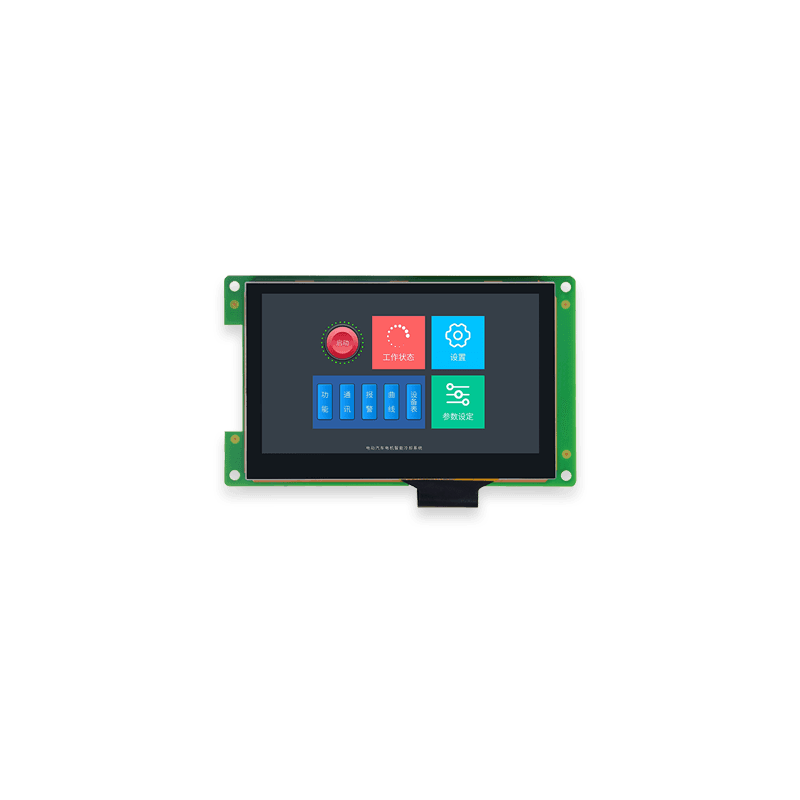
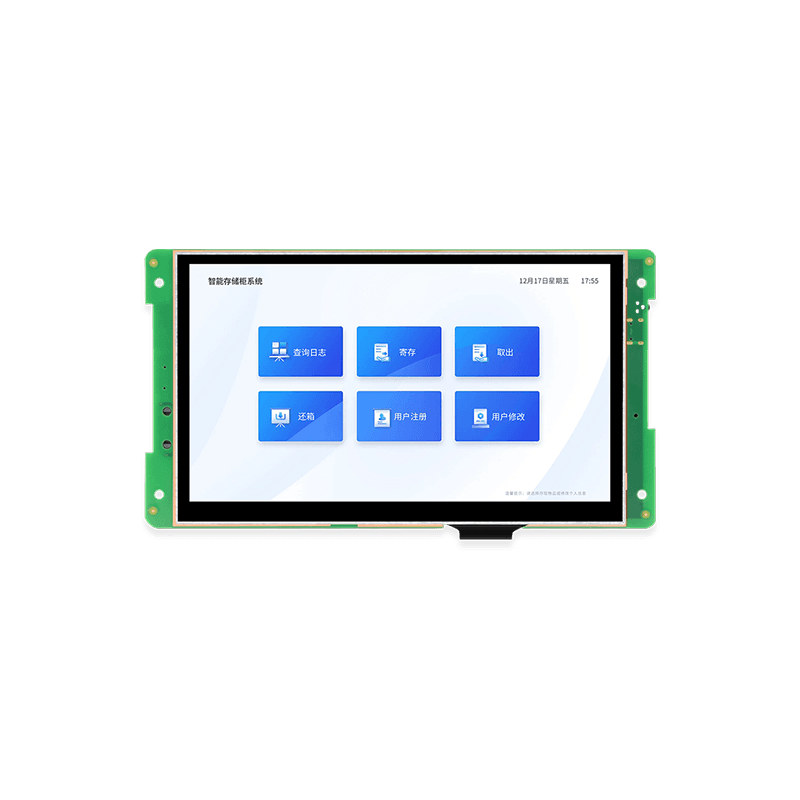
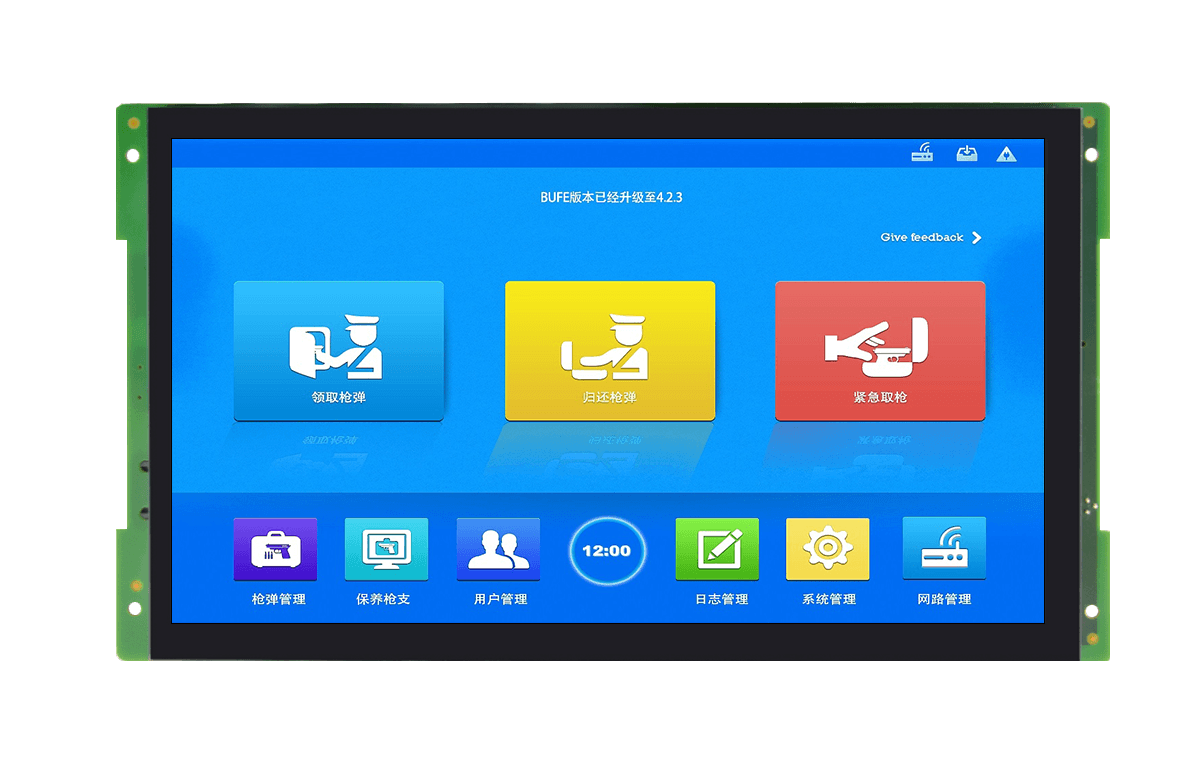
AOYU TECH builds industrial HMI, touch all-in-one panels, and industrial tablets — 35 products across 6 series — for overseas distributors, system integrators, and OEMs. As edge nodes and vision models land beside the machine, the HMI stops being a display and becomes the local control and visualization point: rugged, sealed touch panels built for the cabinet, multilingual interfaces for global lines, and OEM/ODM options so integrators can badge and shape the hardware to the application.
We're not claiming our panels run GPT-6. What we're saying is simpler: when intelligence moves to the floor, the screen it shows up on has to be rugged, certifiable, and integrable — and that's the work AOYU has been doing across 35 SKUs.
If you're scoping a panel, a kiosk, or an OEM build, talk to us:
Contact AOYU TECH · Browse the product lines
Ready to start your HMI project?
Our engineers help you choose the right HMI hardware and software for your project.