
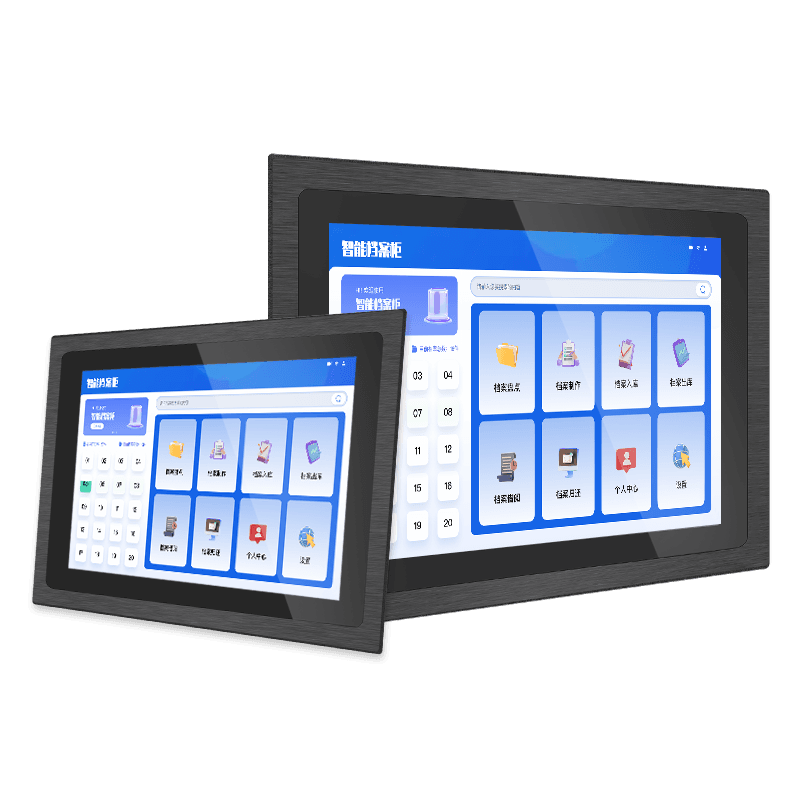
Most buyers start from a catalogue and end up asking for changes. A different bezel so the panel sits flush in a cabinet door. A logo printed on the glass rather than stuck on afterwards. One port added, two removed. Few kiosks or control cabinets take a panel exactly as it ships, and what those changes cost depends mostly on when they are raised.
Tooling is the dividing line. Written into the first specification, a request is a drawing change. After the enclosure has been cut, it becomes rectification work.
OEM and ODM are different purchases
In an OEM arrangement the product already exists. You choose from the six series — S, P, M, G, F or B — and what arrives carries your identity: silk-screened logo on the glass or bezel, your own model numbering, your packaging, your Android build with your launcher preloaded. Electronics, structure and tooling stay put, so existing qualification work remains valid.
ODM starts further upstream: the housing, the mounting concept, the port arrangement or the carrier board itself belongs to the brief. That brings structural or board-level engineering, often new tooling, and a validation cycle that has to be run rather than referenced. More expensive, slower, and sometimes the only route to the shape the equipment needs.
The useful question is not which label sounds better. It is how much of the requirement can be met by modifying something already in production.
The decisions that get expensive once tooling starts
How it mounts
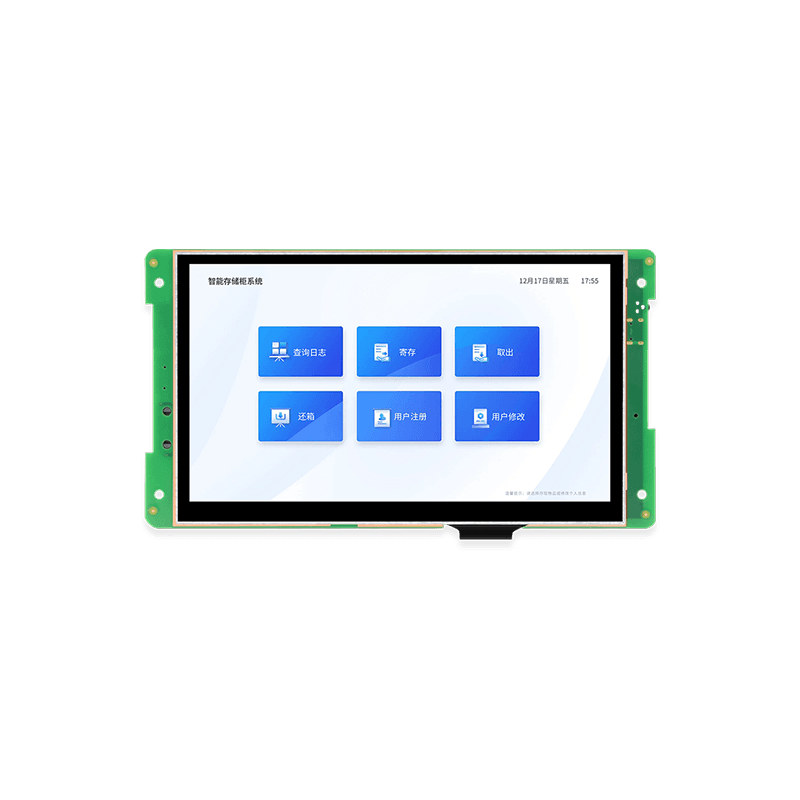
Front-embedded, rear-embedded, open-frame behind an equipment faceplate, wall-mounted or hung off a VESA arm: each one determines the housing, gasket and sheet-metal drawing. Panel units such as the G L1 10.1" are built for a defined cut-out, while open-frame models like the S 7" assume the customer's enclosure supplies the structure. Settling this late means re-cutting panels at the integrator's expense.
Silicon and memory
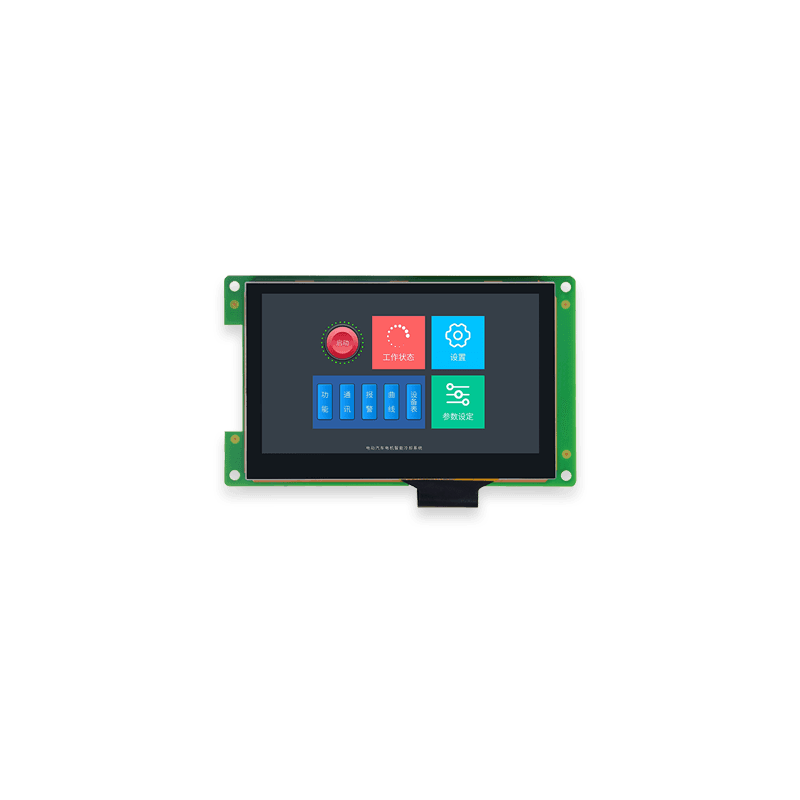
Platform choice usually happens inside a series, and the model numbers tell you most of what matters. IXS070-A133P sits on the S 7", IXM070S1-A133P on the M S1 7". The P S1 10.1" carries IXP101S1-RK3568, a Rockchip RK3568 quad-core A55 at 2.0 GHz; the P X1 15.6" uses IXP156X1-RK3568. Stepping up within one housing is a configuration change. Changing the board outline moves the project into ODM territory.
Glass, printing and the touch layer
Sizes run from 4.3 to 21.5 inches. Cover glass thickness, silk-screen borders, logo placement and anti-glare treatment are decided per project rather than pulled off a shelf, and the touch technology underneath follows hands and cleaning routines rather than budget.
Ports and peripherals
Anything on the board edge or on a tail cable has to be fixed before tooling: serial port count and type, GPIO count, PoE or not, USB orientation, SIM slot, speakers, camera, RFID, RTC battery. Adding any of it later means a board revision; removing an unused port is cheaper, and sometimes saves money too.
Software baseline
OS version, boot logo, applications preloaded, whether it boots straight into a kiosk launcher, how updates are handled, root access, the language list. Cheap per unit, measured in days — but they need a freeze point, because firmware that keeps moving during validation produces test results nobody can interpret.
Sampling: what has to be checked, and by whom
Engineering samples are not the place to be polite. Does it fit the cut-out, does the gasket compress evenly, are the connectors reachable once the machine is closed up. Does it register a gloved hand and survive whatever lands on the glass at shift change. Can it be read under the site's lighting, and does it start properly after an abrupt power cut.
Suppliers bring their own routine — assembly inspection, ageing runs, firmware verification — and should hand over the results. What they cannot bring is your operating conditions: a datasheet will not say whether your operators wear nitrile or leather.
Certification is a schedule item, not paperwork
Which mark applies depends on where the equipment sells and sometimes what it does: CE, UKCA, FCC, RoHS, CCC, UL, or the extra layers attached to medical, rail and marine installations. Two things trip projects up. A certificate held by the manufacturer does not automatically cover your brand, so your name on it means a transfer or a fresh application. And testing consumes samples and weeks, cannot start until the design is frozen, and restarts if a change turns up mid-test.
Settle three points early: which certificates exist for the base model and target market, which ones the project needs under the buyer's name, and who pays for the samples.
Production, revisions, and year three
Before the first run, freeze the configuration — BOM, firmware build, mechanical revision — and agree how changes get communicated. After that, every modification should arrive with a note and a date: field failures get diagnosed against a revision, not against a product family.
For anything still shipping three years out, ask about the display panel and the main controller rather than the model code. TFT panels and SoCs have shorter production lives than the machines they go into, and knowing which replacement the factory has already qualified keeps an end-of-life notice from landing mid-rollout. Lead times and minimum quantities follow how much of the build is standard. Spare-part ratios belong in the first purchase agreement, not in the first complaint.
A rough timeline
- Requirement freeze to engineering sample: 2–5 weeks for a modified standard model.
- Sample validation: 3–8 weeks per round, and most projects run more than one round.
- New tooling or new parts (ODM): add roughly 4–10 weeks.
- Certification: 6–12 weeks per market, often alongside late-stage validation.
- Pilot run to volume production: 2–4 weeks after sample approval.
Planning ranges, not commitments — a silk-screen change and a new enclosure are not comparable projects.
What to send with the first enquiry
- Mounting method, available cut-out or available depth, and preferred screen size.
- Operating conditions: ambient light, temperature swings, liquids, cleaning method, gloves, nearby noise sources.
- Ports and peripherals that must stay, and anything that must go.
- Operating system, the applications that have to run, and how updates are handled.
- Target markets, certificates required, and whose name belongs on them.
- First order quantity, expected annual volume, and the date the line has to start.
Half of those answers change the model we suggest. The other half change the quote.
Where our range starts
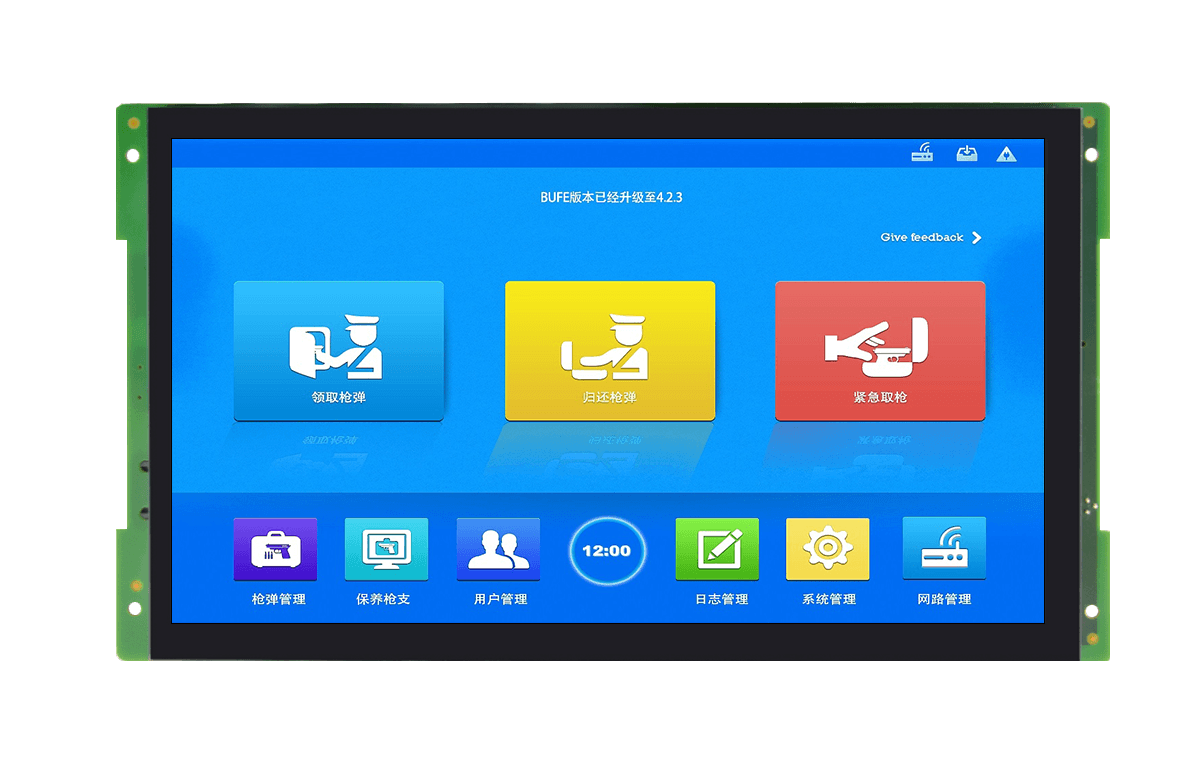
Six series cover most starting points, each aimed at a kind of installation rather than a price bracket. The B Series targets industrial edge and IoT deployments, the M Series is the economical IoT line, the RK3568-based P S1 carries heavier interfaces, and the G Series uses a CNC aluminium front for flush machine mounting. Most adjustments are drawn rather than engineered.
Send the requirement through the inquiry page or reach us on WhatsApp, and we will come back with the model we would modify, what needs new tooling, and which items above we still have to ask about.
Ready to start your HMI project?
Our engineers help you choose the right HMI hardware and software for your project.