
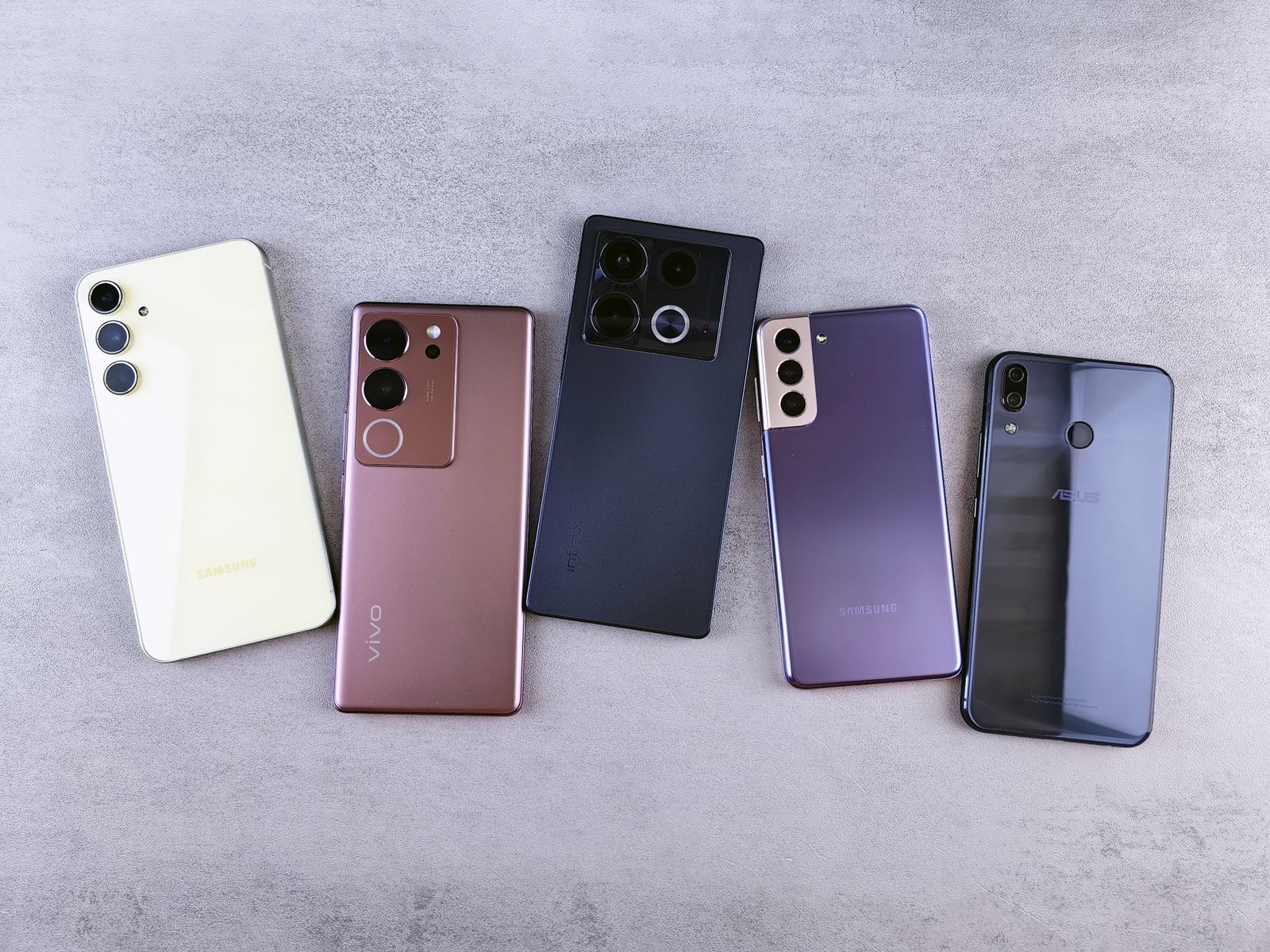
Apple event today: first foldable iPhone expected alongside iPhone 18 Pro
Apple's "Surprise and Shine" event begins at 10 a.m. PT at the Steve Jobs Theater in Cupertino. Expected on stage: the iPhone 18 Pro and Pro Max, updated Apple Watch models (Series 12 and Ultra 4), and the company's first foldable iPhone. Reports point to a book-style device with a 7.8-inch inner display, a roughly 5.3-inch cover screen and a price starting around $2,000. It is the first major product launch for CEO John Ternus, who succeeded Tim Cook on September 1 while Cook moved to executive chairman. Bloomberg reports that the standard iPhone 18, the iPhone 18e and the next iPhone Air have shifted to spring 2027, leaving today's event centered on the premium lineup.
Source: TechCrunch; Reuters via The Economic Times
OpenAI posts AI-produced solution to the Navier–Stokes problem
On September 8, OpenAI published what it describes as a solution to the Navier–Stokes existence and smoothness problem, one of the seven Millennium Prize Problems, which has stood open for about 90 years. The 165-page proof came from an internal model that the company says is more capable than GPT-6 Astra. Around 10,000 agents worked in parallel; a resolution arrived roughly 88 hours in, and Lean formalization took another 17 hours. OpenAI says it will not claim the $1 million prize, and the Clay Mathematics Institute still lists the problem as unresolved. The post also acknowledges concurrent work by Levent Alpöge of Anthropic and Tristan Buckmaster of New York University on the forced Euler equations, and states that OpenAI's agents did not see that work before it was published.
Source: OpenAI; Yahoo Tech (citing The Wall Street Journal)
China plans 3.8 trillion yuan in information infrastructure by 2030
China's Ministry of Industry and Information Technology published its 15th Five-Year Plan (2026–2030) for the information and communication sector on September 7. The plan sets 2030 targets of 3.8 trillion yuan (about $566 billion) in cumulative information infrastructure investment, 9,800 EFLOPS of intelligent computing capacity, 4.1 trillion yuan in industry revenue and 95 percent 5G penetration. It also calls for 500,000 new 5G-A base stations, gigabit optical network trials and commercial 6G "at an appropriate time." Intelligent computing capacity stood at 2,185 EFLOPS at the end of June, according to the ministry.
Source: China Daily; Xinhua
TSMC, Samsung and Intel commit to ASML's High NA EUV
ASML announced on September 8 that it will build its most advanced lithography systems together with its largest customers, for the large data-center chips designed by companies such as Nvidia. TSMC plans to use High NA EUV in volume production of advanced nodes from 2030. Samsung intends to bring the technology to DRAM mass production by 2028, which it says would be an industry first, and Intel reports that it has already processed more than one million wafers with High NA EUV. ASML and TSMC have also started a joint program to move photomasks from the 6-inch format to 12 inches, with a pilot line planned by 2031 and volume production by 2033. ASML CTO Marco Pieters said the larger masks could lift system output by 40 percent.
Source: Tech Times
Samsung leads €3 billion round in Mistral AI
Mistral AI has raised €3 billion in Series D funding, the Paris-based company announced on September 8. Samsung Electronics led the round, with EQT's Scaleup Europe Fund and PSG Equity as co-leads and investors including Nvidia, Andreessen Horowitz and General Catalyst. The financing values Mistral at about €21 billion, which Reuters described as the largest equity raise by a European AI company. Mistral expects recurring revenue above $1 billion this year. Its previous round, a €1.7 billion Series C led by ASML, closed in September 2025 at an €11.7 billion valuation.
Source: TechCrunch
Huawei and Xiaomi launch foldable flagships the same day
September 7 brought two foldable launches in China. Huawei's Mate XT 2, a tri-fold, starts at 19,999 yuan and runs the Kirin 9050 Pro, the first flagship Kirin the company has detailed in six years; Huawei says global shipments of its tri-fold line have passed one million units. That evening, Xiaomi introduced the 18 Fold, a 219-gram phone with a 7.58-inch inner display and a 5.38-inch cover screen, powered by Xiaomi's in-house 3nm XRING O3 chip. The top configuration carries LPDDR6 memory from CXMT, which the company says is the first LPDDR6 to ship in a phone. Prices start at 10,999 yuan, making it Xiaomi's first mass-production phone priced above 10,000 yuan.
Source: Jiefang Daily
ChatGPT Images 2.5 cuts generation latency by up to 50 percent
ChatGPT Images 2.5 is rolling out to all ChatGPT, ChatGPT Work and Codex users, OpenAI said on September 8. Generation latency is down by up to 50 percent compared with Images 2.0, and the model keeps earlier edits consistent across multiple rounds of instructions. New features include Sketch, which uses a user's drawing as a reference, plus templates and comment-based edits. Two API models ship alongside: GPT-Image-2.5 Flare and the higher-precision GPT-Image-2.5 Sunburst. OpenAI says users now create more than 3 billion images per week across ChatGPT Images and the API.
Source: OpenAI
Arm ships CSS for Mobile 2
Arm released the second generation of its compute subsystem for mobile at the Arm Everywhere China event in Shanghai on September 8. CSS for Mobile 2 supports agentic AI and AI-native graphics within a single computing platform.
Source: National Business Daily

Ready to start your HMI project?
Our engineers help you choose the right HMI hardware and software for your project.