
An IP rating on a datasheet looks like a fixed number. In practice it describes one specific laboratory test, and picking the wrong test is how panels fail in the field. An enclosure rated IP67 can sit under water for half an hour and still take water in the first time somebody aims a wash-down hose at it. Which question each code answers is worth knowing before you specify, because it is cheaper than shipping replacements.
What the two digits cover
IEC 60529 defines the IP code; the Chinese national standard GB/T 4208 is equivalent to it. The first digit runs from 0 to 6 and covers solid objects and dust. The second runs from 0 to 9 and covers water. Where only one of the two was assessed, the other is written as X — IPX6 means water was tested and dust was not.
Six is the ceiling for solids, and it means dust-tight rather than dust-resistant. In the test, the enclosure sits in a chamber with talcum powder held in suspension while a partial vacuum is maintained inside it, for up to eight hours. IP5X permits a limited amount of dust ingress, which is acceptable in plenty of environments and a bad idea wherever fine powder can cake onto electronics.
IP65 and IP66: jets, not immersion
Both codes describe water delivered through a nozzle, not rainfall and not submersion.
- IPX5 uses a 6.3 mm nozzle at roughly 12.5 litres per minute and about 30 kPa, sprayed from around three metres.
- IPX6 switches to a 12.5 mm nozzle at roughly 100 litres per minute and 100 kPa, at the same distance.
The step from 5 to 6 is water volume and impact energy. Panels in corridors or indoor kiosks that see nothing worse than a damp cloth need neither. Anything mounted outdoors, near a wash bay, or alongside a machine that gets hosed down weekly does.
IP67 does not replace IP66
IPX7 is a static test: thirty minutes submerged in still water, with the deepest point roughly a metre below the surface. No pressure, no flow, no jet. That is why the two are not interchangeable, and why enclosures assessed both ways are marked with both codes — IP66/IP67, or IP67/IP68.
A gasket that seals by compression can hold back slow immersion perfectly well and still get lifted off its seating by a hard jet. Put an IP67-rated panel into a food plant that washes down at the end of every shift and you will be replacing it within the year.
Where IP69K comes from
The K code is not part of IEC 60529. It originated in the German road-vehicle standard DIN 40050-9, since replaced by ISO 20653, and was written for vehicles that get pressure-washed: cement mixers, dump trucks, refuse collection bodies.
The parameters are severe. Water at 80 °C ± 5 °C, 80 to 100 bar, 14 to 16 litres per minute, through a nozzle held 100 to 150 mm away. The sample sits on a turntable turning at roughly 5 rpm and receives 30 seconds each at 0°, 30°, 60° and 90°.
IEC 60529 added its own level 9 in the 2013 revision. On the water side IPX9 and IP69K align closely enough that a pass against one is generally accepted as a pass against the other. The difference is that IEC permits 175 mm ± 25 mm for enclosures too large for the turntable, which reduces impact energy somewhat.
On the dust side the gap is wider than most buyers expect. IP6K under ISO 20653 uses Arizona road dust — coarse, abrasive silica. IP6X under IEC 60529 uses fine talcum powder. For a vehicle working in a quarry the abrasive dust is the real threat. For hygienic indoor production, where sugar and flour behave more like talc, IP69 is arguably the better-matched code even though the market keeps asking for the K.
Match the code to how it gets cleaned
Start from the cleaning procedure, not from the datasheet column.
- Dry indoor areas — assembly rooms, control rooms, hotel corridors. Dust and the occasional wipe. IP5X on the front is normally sufficient.
- Outdoor kiosks, EV chargers, gate terminals — driven rain and the occasional low-pressure rinse. IP65 on the sealed face.
- Machine shops and CNC enclosures — metal swarf, coolant mist, weekly hose-down. IP65 or IP66 together with a dust-tight front.
- Food, beverage and pharmaceutical lines — hot water at high pressure, often with caustic agents. IP69K territory, usually alongside stainless housing requirements and chemical compatibility checks that no IP code describes.
- Pits, wash tunnels, areas that flood occasionally — genuine still immersion. IP67 or IP68, neither of which says anything about pressurised cleaning.
Structure decides what you can achieve
Ratings belong to the assembled unit, mounting included. This is where integration projects lose the most time.
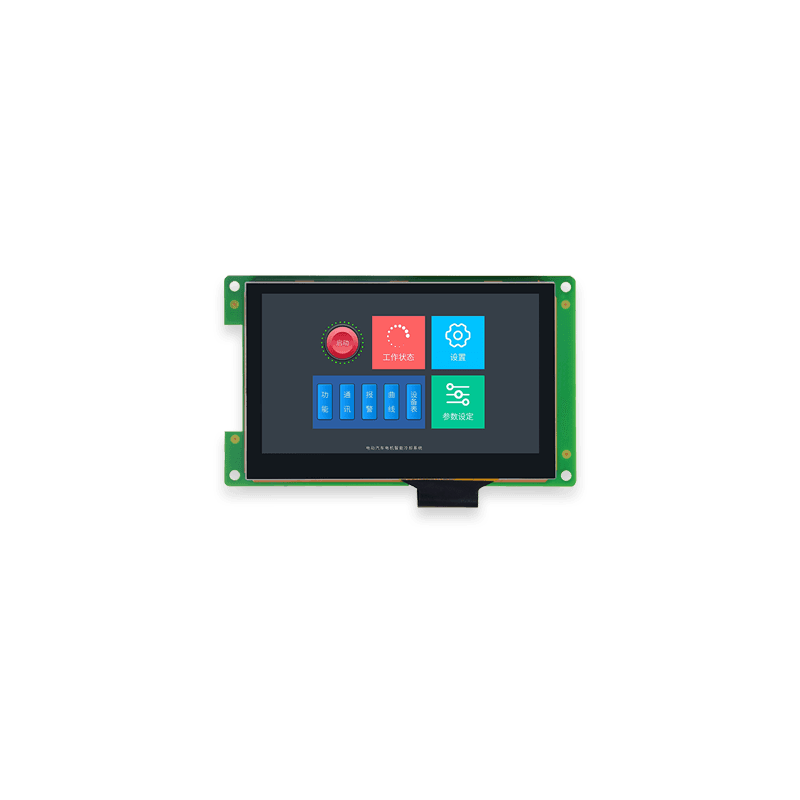
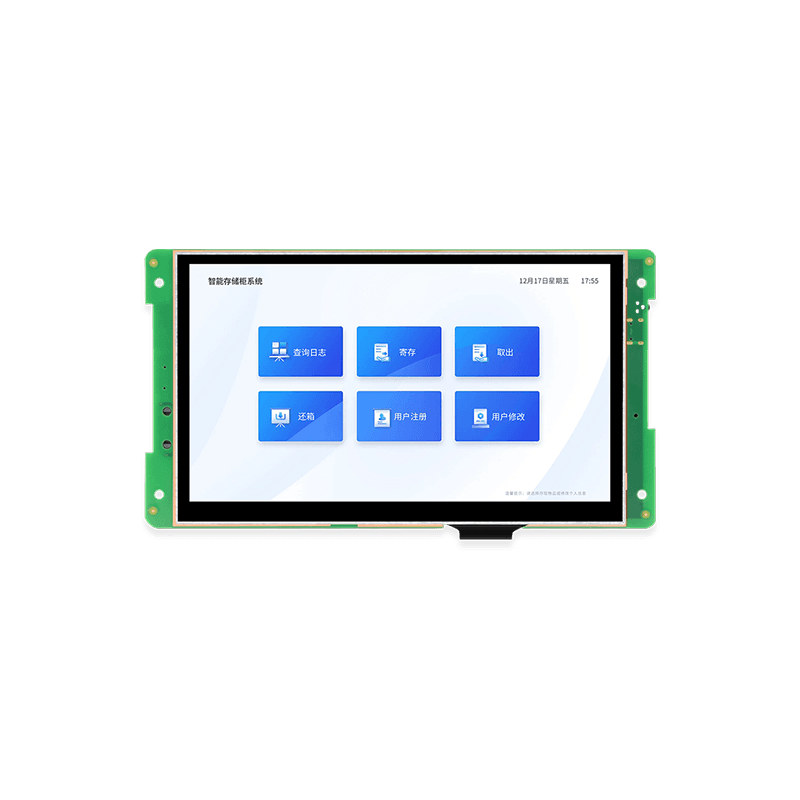
Open-frame panels are board-level assemblies intended to go inside a shell that you design. Our S 7" Touch Panel PC and S 10.1" Touch Panel PC belong to this group: the front bezel, gasket and clamping pressure are yours to specify. That is an advantage when your enclosure geometry is unusual, and a responsibility when it is not — no rating can be quoted until the panel mechanics are settled.
Enclosed designs take the opposite route. The F IC 7" Touch Panel PC uses an integrated aluminium die-cast frame mounted from outside the cabinet, so the frame itself supplies a continuous mating surface for the gasket rather than depending on how flat the host panel happens to be.
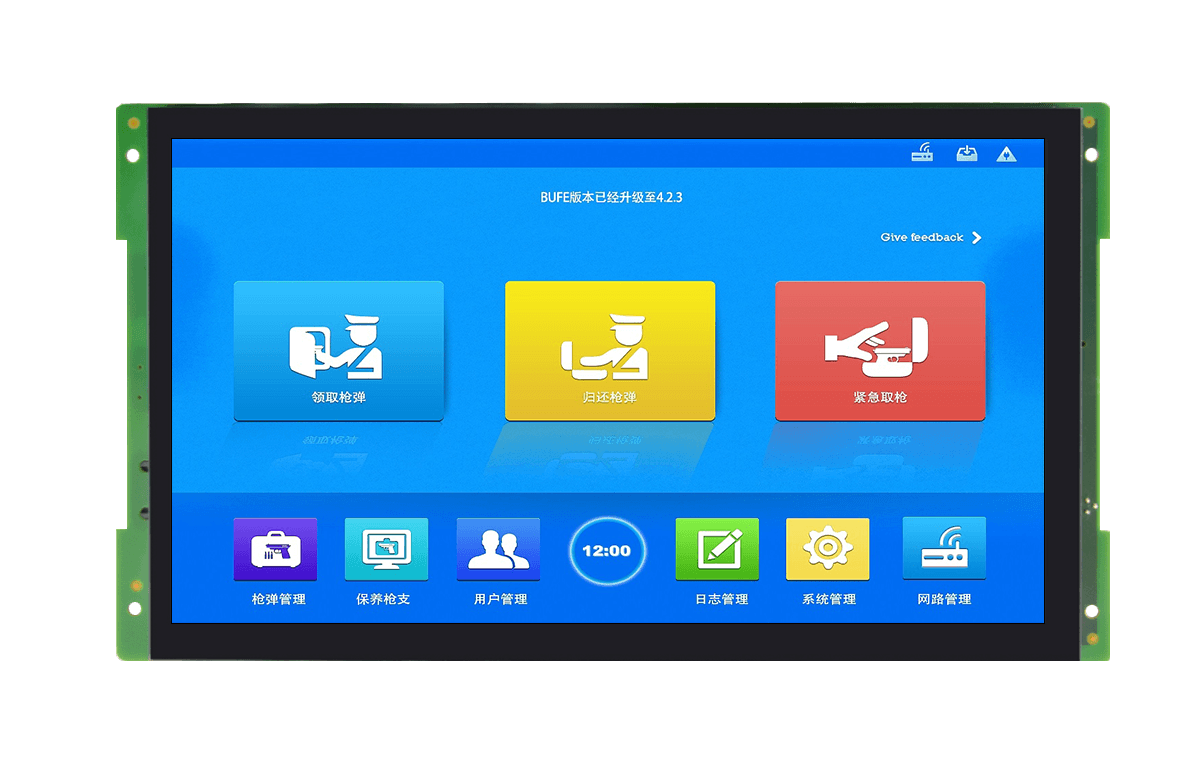
Which side of the cabinet the panel loads from matters equally. Front-embedded models such as the P X2 15.6" Smart Control Panel press their flange against the cabinet face, compressing the gasket outwards and keeping the seal visible for inspection. Rear-embedded models like the P X1 15.6" are loaded from behind, which leaves a clean visible surface but moves the sealing interface inside the cabinet, where somebody has to design it.
No construction carries a rating on its own. The figure belongs to the finished assembly, so the tested configuration is worth confirming before you commit to anything.
What to ask before you quote
- Which standard and revision is the test report issued against — IEC 60529, ISO 20653, or something else?
- Does it cover the whole assembly, or only the front bezel clamped against a test plate?
- Was it tested as mounted, with the gasket material you intend to use?
- What gasket material, and what replacement interval does the manufacturer state?
- How do the cable glands and vents rate? Those are usually where water enters first.
Suppliers answer these quickly when the answers are clean.
If you are specifying ingress protection for a project in front of you, send us the cleaning method, mounting style and expected service life. We will say which construction fits and share the test documentation we hold. Start at our inquiry page, or go straight to the series you need: S Series open-frame panels, F IC integrated die-cast panel, P X1 rear-embedded and P X2 front-embedded.
Ready to start your HMI project?
Our engineers help you choose the right HMI hardware and software for your project.